First screenWhat a new visitor sees
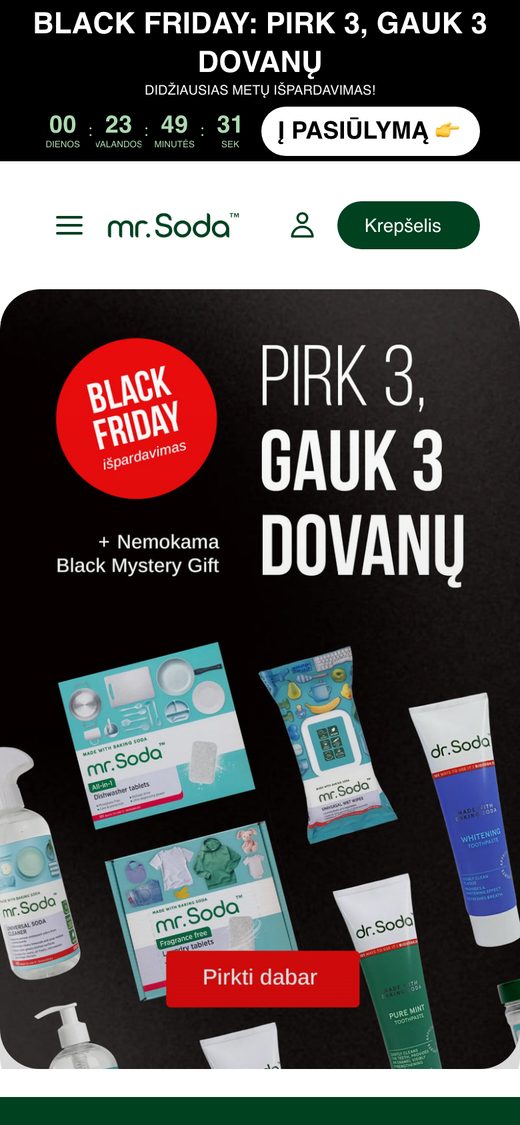 123
- A countdown. Before the brand name.
- “Buy 3, get 3 free.” The sale is the hero.
- “Buy now.” No reason to buy yet.
What it costs
A visitor learns the price before the story.
I’m Aleksis. I take products that are good but quiet, and build the path from the first ad to the second order. Instead of a CV, I took three of your portfolio companies apart.
Create demand. Don’t chase it.

 9 posts, one offer

DTC · soda cleaning, Lithuania
Posts every day. The same sale, 0 to 7 likes.
See the plan →
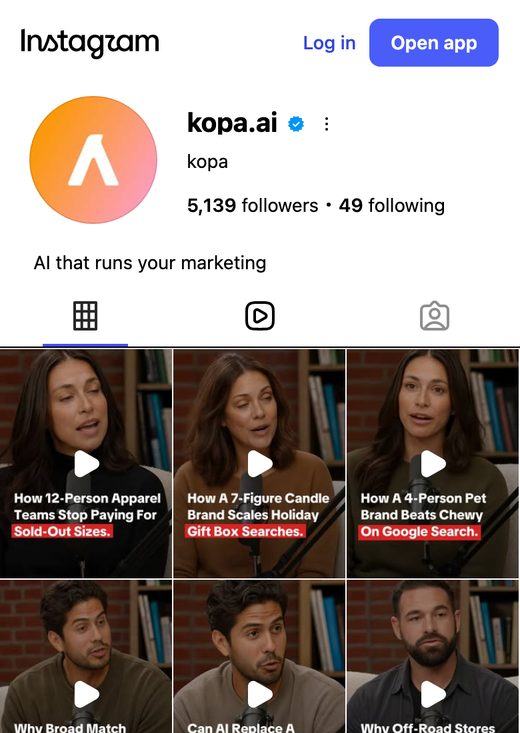 12 reels, 2 likes
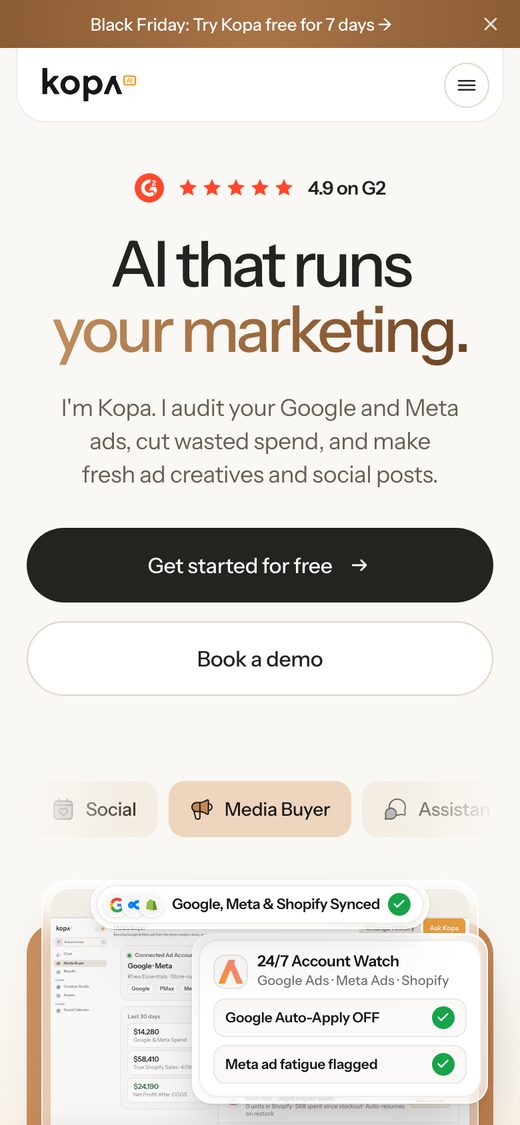
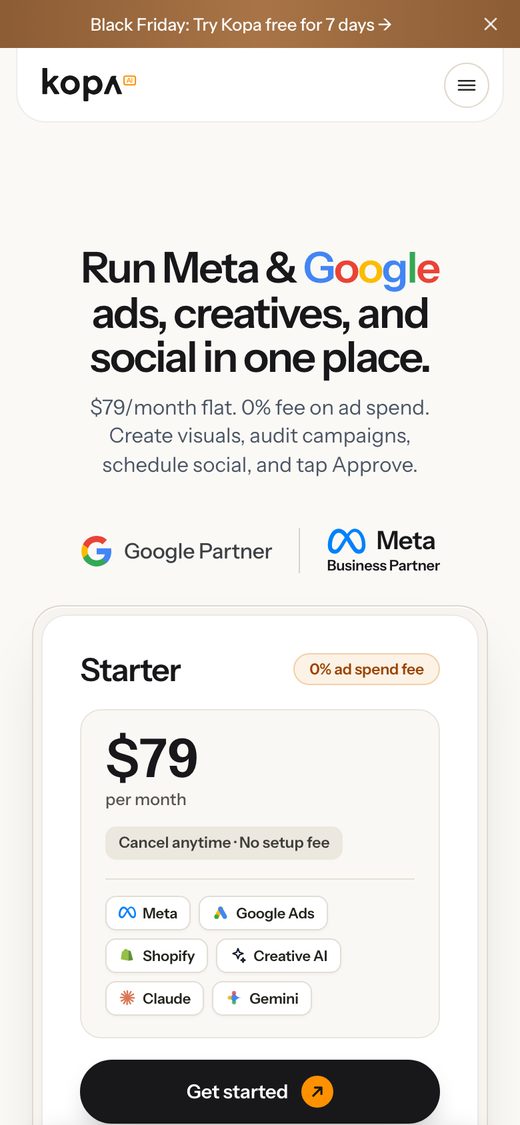
AI · runs Meta and Google ads
Sells social posts. Its own get 0 likes.
See the plan →

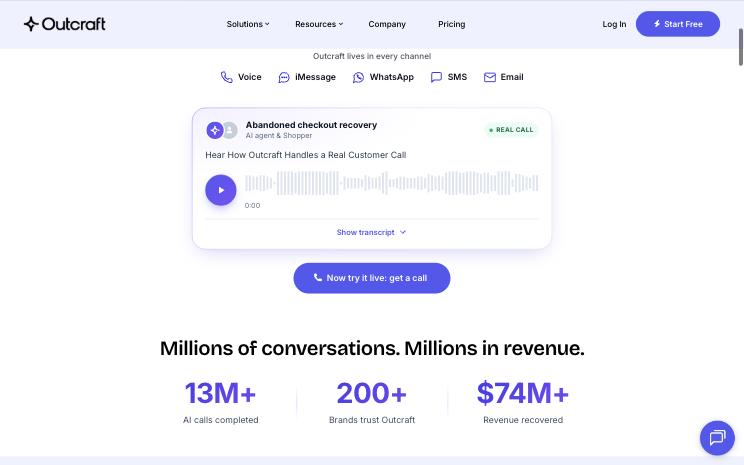 $74M+ recovered
AI · sales agent for ecommerce
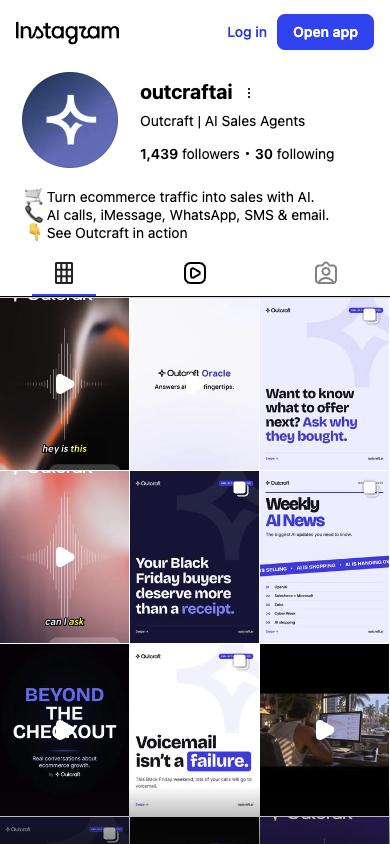
13M calls behind it. 38 YouTube subscribers in front.
See the plan →
A live show where builders pick a card, build a product, and test it on real customers. Investors watch the numbers, not the pitch.
See the crazy idea →
How mr.Soda can sell the soda story, not the sale
Aleksis, about 3 minutes · video coming
What’s broken
Every recent post is the same Black Friday offer, and nobody reacts: 0 to 7 likes on 9 posts in a row.
What I’d do
Lead with the founder’s soda story and real kitchens. Turn “buy 3, get 3” into a refill habit.
What I’d measure
Cost per first order, and how many come back for a refill by day 45.
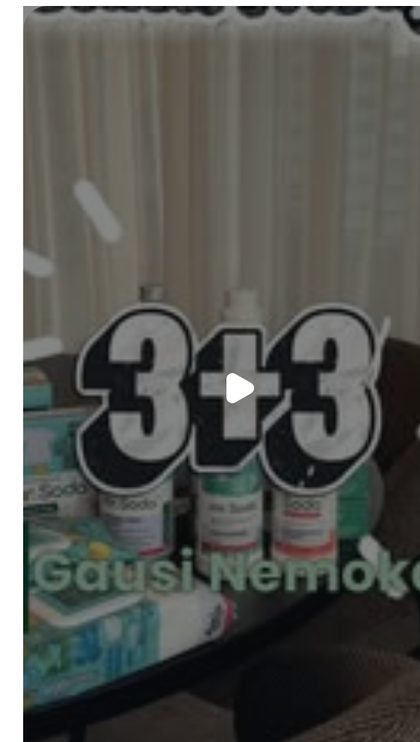
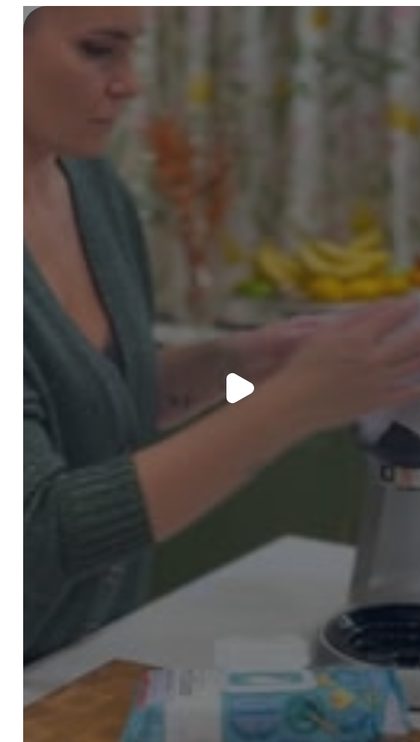
Every post on @mrsoda.lt from the last weeks, ranked by likes. Public counts, 29 November 2026.
What it tells me
One creator cleaning up after her TV shoot got 68 times more likes than mr.Soda’s best Black Friday post. Their “cleaning tips” series started in August and stopped after one episode. People react to a real kitchen. They scroll past a sale they’ve seen nine times.
The creator post is on Kotryna Starkienė’s account, so her audience helps. That’s the point: borrowed audiences work.
mr.Soda’s own homepage, captured 29 November 2026.
123What it costs
A visitor learns the price before the story.
123What mr.Soda already has
A founder with a story nobody else can copy.
Do this
Move this story to the first screen and into the ads.
 12
What it costs
The same message for six months. Nothing new gets tested.
Live pages, captured 29 November 2026. The green pins are what they do better.
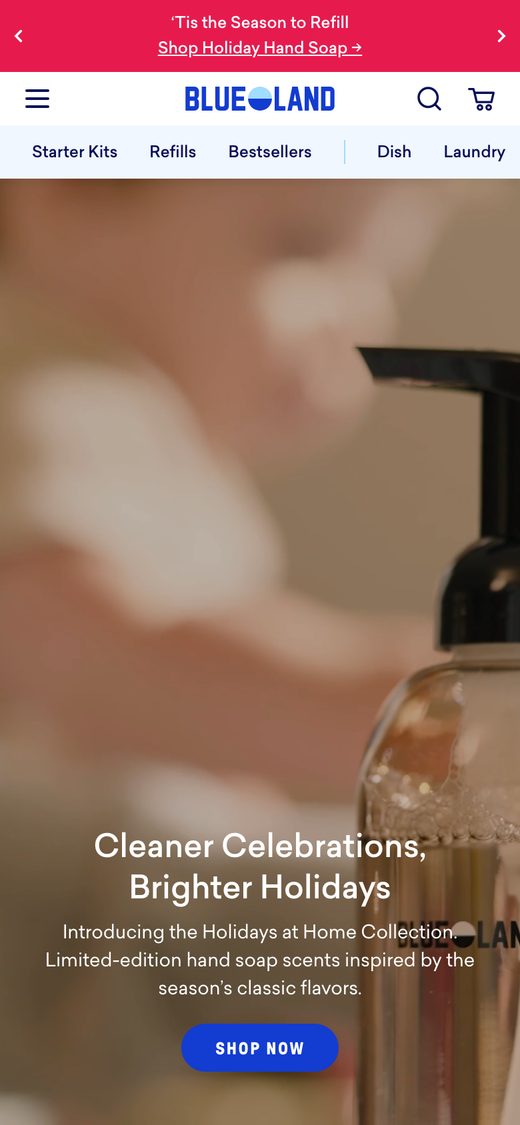 123
Their model
Refill subscription at 30% off autoship. They report 1M+ customers and $100M+ in sales.
Take this
A mr.Soda home kit, then refills.
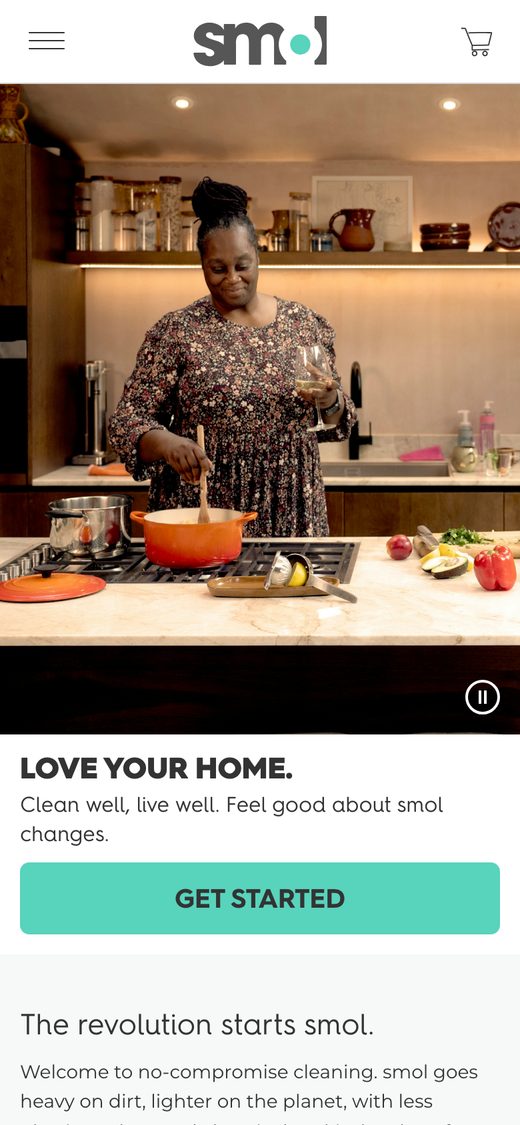 12
Their model
A 9-wash trial for postage, then a flexible subscription. The CEO said it doubles year on year.
Take this
A trial pack instead of “buy 3, get 3”.
1What mr.Soda already has
A creator who already uses the product on camera.
Take this
Ten more like her, every month.
Sources: Blueland’s refill subscription and growth figures from Blueland and Causeartist. smol’s trial and growth from Which? and smol. Company figures, not audited.
How three cleaning brands reward a customer for coming back.
What it tells me
mr.Soda gives the biggest discount and gets nothing back: no habit, no subscription, no reason to return before the next sale. The others give less, and keep the customer. The money is already being spent. It’s just spent on the wrong moment.
The full analysis behind the plan. Open what you want.
Today
A cleaning brand that is always on sale.
What they should be
Soda-clean you could eat off. The Lithuanian alternative to harsh chemicals.
For families who don’t want harsh chemicals around kids, pets and food, mr.Soda cleans with soda, without fragrances, phosphates or chlorine. Unlike supermarket cleaners, the founder’s rule is simple: if it isn’t safe enough to drink, it isn’t safe enough for your plate.
Hero
Kids, a dog, dinner on the table.
Problem
You wouldn’t want them near the plates.
Turn
The founder’s search for something simple.
Proof
Creators cleaning after real cooking.
Invite
Then refills, when you run out.
Three screens built from mr.Soda’s own best line, its best post, and what Blueland and smol already prove.
Homepage
mr.Soda · since the soda market
If it isn’t safe to drink, it isn’t safe for your plate.
Start with the home kit
Home kit and refills
Your home kit
Glass spray bottleBought once, refilled forever
Checkout
One review count, everywhere
123Real kitchens
REAL KITCHENS · EP. 4
After the dinner party
Try the kit they used
Every move in the plan has a company already doing it. Real pages, captured 29 November 2026.
Already works for
Starter kits and refills lead the menu. 30% off refills on autoship.
mr.Soda: a home kit, then refills every 6 weeks.
Already works for
A 9-wash trial for postage, then a flexible subscription.
mr.Soda: a trial pack instead of “buy 3, get 3”.
Already works for
A TV host cleaning her kitchen after a shoot: 476 likes.
mr.Soda: ten creators a month, in real kitchens.
The format that already worked (a real person, a real mess), plus the founder’s story. Four weeks, starting 30 November.
After the dinner party.
Mon + ThuOne stain. One spray. 30 seconds.
Tue + SatWhy soda? A story from a market stall.
WednesdayOne cleaner, five uses.
FridayFour ads, storyboarded second by second. Same budget for each, live for 7 days.
Real kitchen
A messy table after friends left.
One spray, one wipe, a clean plate.
Start with the home kit.
Why: The format behind their best post: 476 likes.
Soda vs stain
Burnt pan, timer at 0:00.
mr.Soda, a cloth, the timer runs.
Clean at 0:30. Try the kit.
Why: Proof without a claim.
Founder
Žydrūnas at a market stall.
“I wanted something simple. Soda.”
Read the story. Start the kit.
Why: Their own best line, never used in an ad.
Refill, don’t rebuy
A drawer full of half-empty bottles.
One glass bottle, refills by post.
Home kit + refills, skip anytime.
Why: Sells the habit instead of the sale.
Every ad is read in this order. The first weak number tells you what to fix.
3-second views ÷ impressions
If it’s weakChange the first 3 seconds.
Clicks ÷ impressions
If it’s weakChange the caption.
Spend ÷ first orders
If it’s weakFix the first screen.
Refill sign-ups ÷ first orders
If it’s weakFix the kit offer.
Second orders ÷ first orders
If it’s weakFix the reminder emails.
The bottom two of four after 7 days. The budget moves on.
A strong hook with weak clicks gets a new caption. Strong clicks with expensive orders send us to the homepage, the countdown first.
The lowest cost per first order doubles its budget each week while it holds. Its creator gets the next episode.
Every move, with what it needs, what it costs, the rule that could stop it, and a plan B.
Four weeks in Lithuania. Starting Monday, 30 November.
Week 130 Nov – 4 Dec
Week 27 – 11 Dec
Week 314 – 18 Dec
Week 421 – 23 Dec
January
Real kitchens every week, refills every 6 weeks.
February
The same kit, local creators, local kitchens.
Spring
Two brands from one portfolio, one home kit.
Week 1 needs: the founder’s hour, ad account access and a creator budget.
How Kopa can sell itself with its own best argument
Aleksis, about 3 minutes · video coming
What’s broken
Six reels a day on Instagram, 0 to 1 likes each. The product sells social content, and its own account is the demo.
What I’d do
Lead with the one argument nobody can ignore: a $5,200 agency invoice vs $79 a month. Fewer posts, real proof.
What I’d measure
Trial starts, trial-to-paid, and month-two retention.
Every post on @kopa.ai from 27 to 29 November 2026. 5,139 followers.
27 Nov1 post · 0 likes
28 Nov6 posts · 0 likes
29 Nov5 posts · 2 likes
0
likes on 12 posts
0–1 likessocial posts?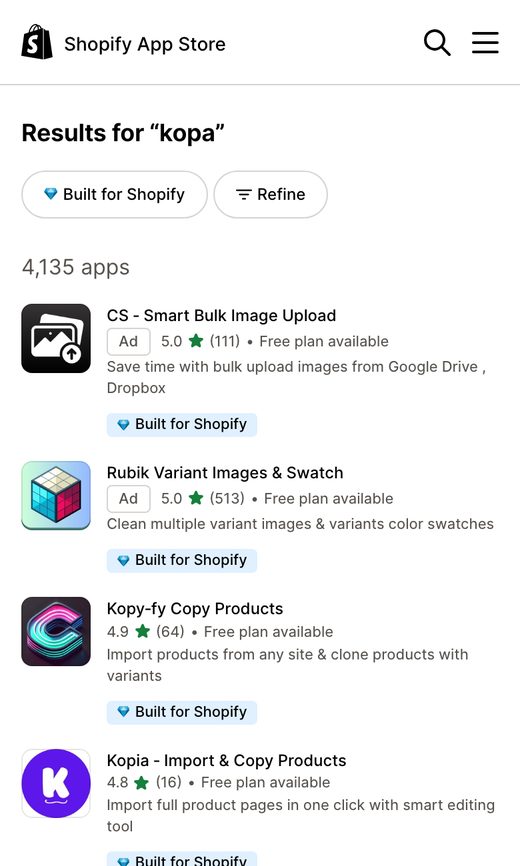 not here
What it tells me
The topics are good: wasted Google spend, sold-out sizes still running ads, a real agency invoice. But six a day, same face, same format, and nobody reacts. A prospect who checks Kopa’s own feed sees the product’s output getting no reaction.
Monthly cost for a Shopify brand’s Meta and Google ads, by route. Figures from Kopa’s own content and pricing.
What it tells me
This is a 65-to-1 price gap, and it’s already written. It sits in a reel that got 0 likes and a pricing line most visitors never reach. The first ad writes itself: the invoice on the left, $79 on the right.
Agency and freelancer figures are the examples Kopa uses in its own posts on 28 and 29 November 2026.
Live pages, captured 29 November 2026. The green pins are what they do better.
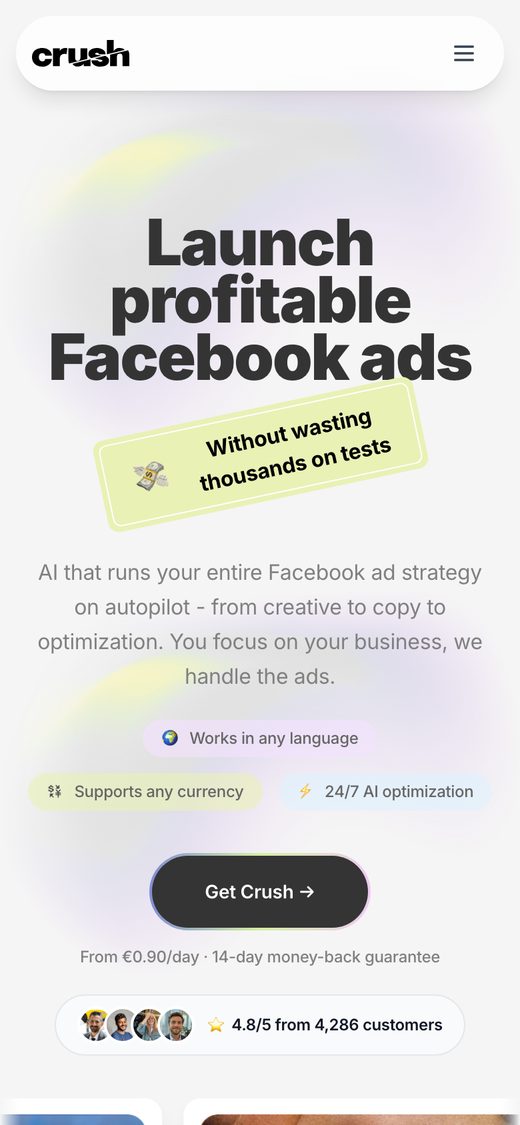 123
Kopa has
2,000+ customers, by its own funding news. The homepage doesn’t say it.
Take this
Put the customer count under the headline.
 123
Kopa has
A 4.9 on G2 badge. Good, but small.
Take this
Logos of real stores using Kopa.
123What it costs
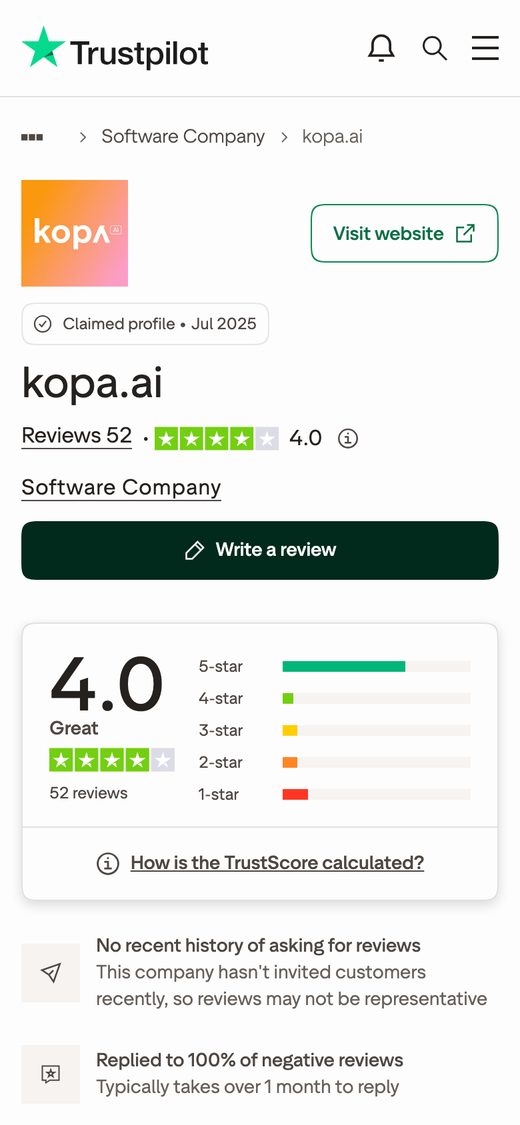
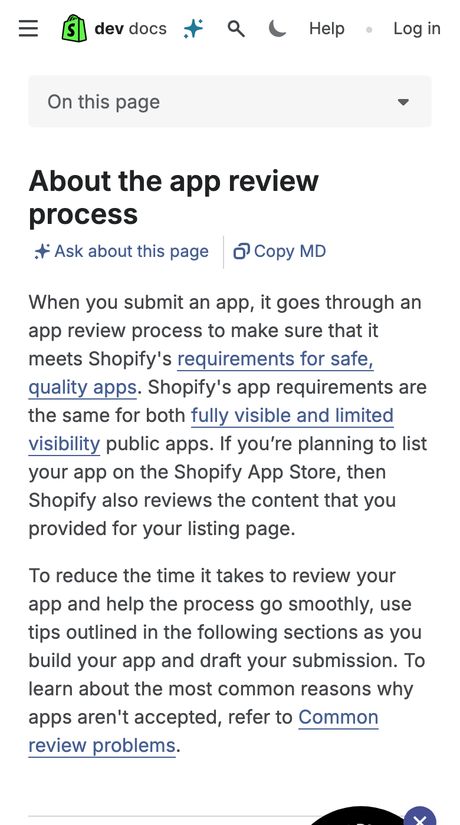
Trial terms that feel like a surprise turn into public reviews.
Take this
One clear price sentence, before sign-up.
Sources: Kopa funding and customers from Pulse. Review complaints from Trustpilot, single-user accounts.
Five blocks every growth plan needs: who buys, how you reach them, what it costs, proof, and what comes next.
The headline, my version
We win Shopify brands that pay an agency for Meta and Google, by showing the invoice next to $79, and we track cost per paying store from day one.
“E-commerce teams.”
Shopify brands paying an agency or freelancer for Meta and Google ads.
Six reels a day, 0 to 1 likes.
One invoice teardown a week, real-audit clips, and ads made from them.
Not visible.
Cost per trial and per paying store, tracked weekly.
A G2 badge. 52 Trustpilot reviews, 4.0.
Customer count, store logos, before/after spend from real audits.
Not stated.
The Shopify App Store, then agencies as partners.
The full analysis behind the plan. Open what you want.
Today
Another AI marketing tool, posting a lot.
What they should be
Your Meta and Google ads, run for $79 a month instead of an agency invoice.
For Shopify brands paying agencies for Meta and Google, Kopa audits, runs and refreshes the ads for $79 a month flat, with 0% fee on ad spend. Unlike an agency, it watches the store 24/7 and waits for your approval.
Hero
Paying an agency, unsure what for.
Problem
$5,200 in month one, setup and feed fees included.
Turn
Every change waits for approval.
Proof
Sold-out sizes still running ads, found and fixed.
Invite
With the price said once, clearly.
Three screens that make Kopa’s best argument visible and fix what people complain about.
Homepage
FOR SHOPIFY BRANDS
Your agency invoice: $5,200. Kopa: $79.
2,000+ stores · 4.9 on G2
Audit my ads free
Pricing, said once
One price. No surprises.
Start the trial
Weekly audit, shareable
YOUR WEEK · EXAMPLE
Kopa stopped $412 of wasted spend.
Share this report
Every move in the plan has a company already doing it. Real pages, captured 29 November 2026.
Already works for
“4.8/5 from 4,286 customers” and a 14-day money-back guarantee, on the homepage.
Kopa: show the customer count and a clear guarantee.
Already works for
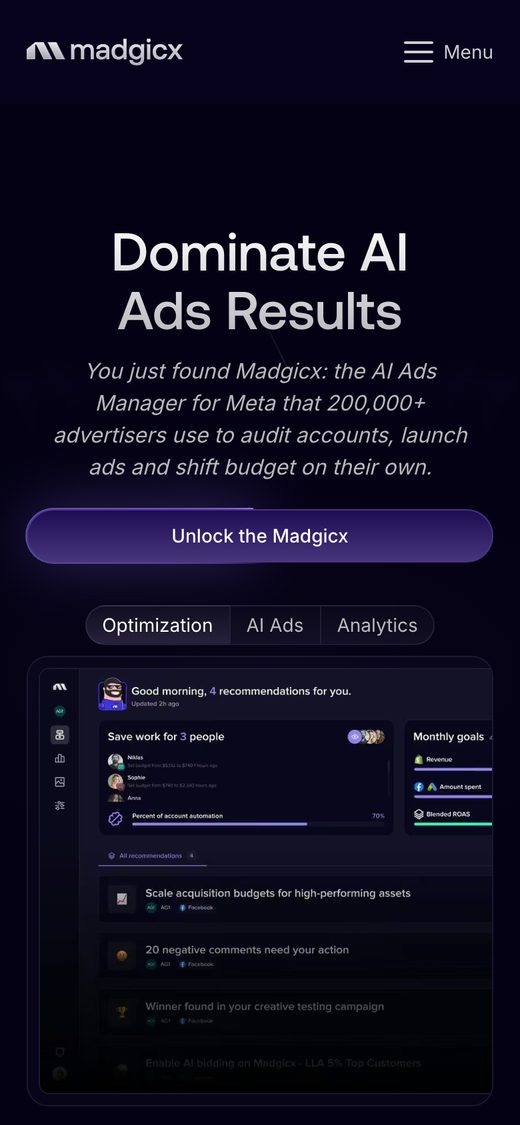
“200,000+ advertisers” in the first paragraph.
Kopa: “2,000+ stores” under the headline.
Already works for
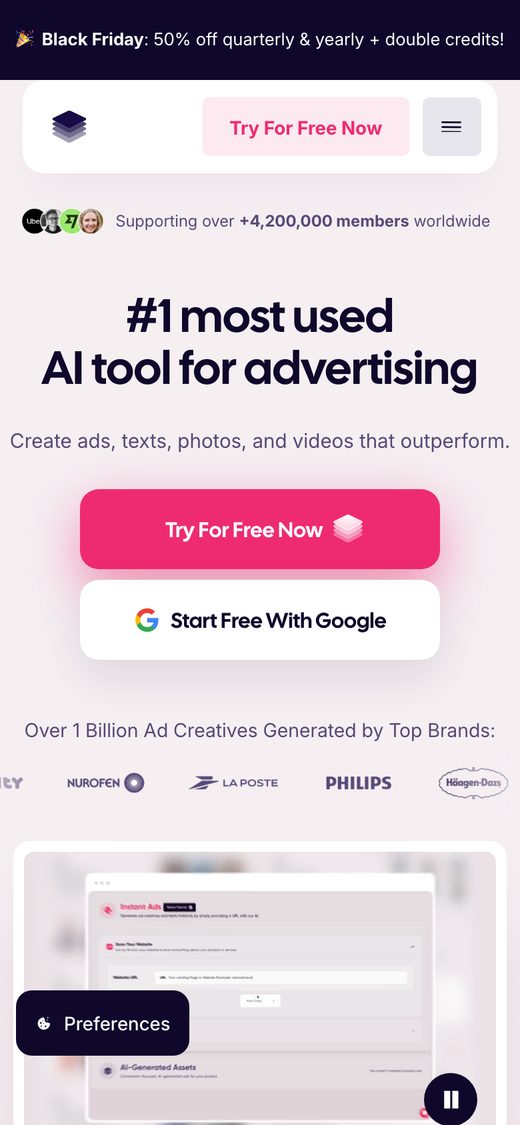
Big-brand logos and “4,200,000 members” before the fold.
Kopa: logos of real Shopify stores using it.
From six reels a day to four a week, each built on something real. Four weeks, starting 30 November.
A real agency invoice, line by line.
TuesdaySold-out sizes still running ads.
ThursdayCan an AI replace your agency?
MondayWeek one with Kopa.
FridayFour ads, storyboarded second by second. Same budget for each, live for 7 days.
The invoice
A real month-1 invoice, fees highlighted.
Kopa: $79 flat, 0% of spend.
Audit my ads free.
Why: Their best argument, out of a 0-like reel.
The audit
Black Friday, a size is sold out.
Google keeps spending on it.
Kopa pauses it. You approve.
Why: Shows the product catching real money.
Store result
A store founder, to camera.
The weekly report on screen.
Start the 7-day trial.
Why: Proof from a customer, not from Kopa. Example figure until a real one is approved.
Clear trial
The price, in one sentence.
“We remind you 2 days before.”
Start the trial.
Why: Answers the Trustpilot complaint before it happens.
Every ad is read in this order. The first weak number tells you what to fix.
3-second views ÷ impressions
If it’s weakChange the first 3 seconds.
Clicks ÷ impressions
If it’s weakChange the headline.
Trials ÷ visits
If it’s weakFix the homepage and pricing.
Paying ÷ trials
If it’s weakFix onboarding and the first audit.
Paying in month 2 ÷ month 1
If it’s weakFix the weekly report.
The bottom two of four after 7 days. The budget moves on.
A strong hook with weak clicks gets a new headline. Many trials but few payers send us to onboarding and the first audit.
The lowest cost per paying store doubles its budget each week while it holds. Its message moves onto the homepage.
Every move, with what it needs, what it costs, the rule that could stop it, and a plan B.
 checked
Four weeks to turn the feed into proof. Starting Monday, 30 November.
Week 130 Nov – 4 Dec
Week 27 – 11 Dec
Week 314 – 18 Dec
Week 421 – 23 Dec
January
The invoice series becomes the channel.
February
Partners bring their clients.
Spring
Listed, reviewed, found by owners searching.
Week 1 needs: one real invoice, ad account access and 30 minutes with a founder.
Why every Outcraft ad should start with a real call
Aleksis, about 3 minutes · video coming
What’s broken
Ten ads, one idea: iMessage. The $74M story is not in any of them.
What I’d do
Make ads from real calls: the objection, the answer, the order.
What I’d measure
Demo bookings per euro spent.
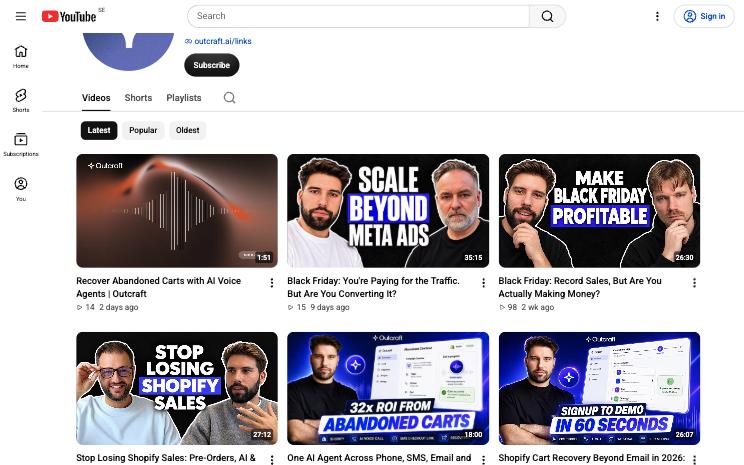
Outcraft’s YouTube videos, ranked by views. Public counts, 29 November 2026.
What it tells me
Two-minute real calls beat 35-minute podcasts, at a tenth of the effort. And the most-watched video talks to B2B SaaS teams, not to the Shopify store owner who buys. The content machine is pointed at the wrong person and runs on the wrong format.
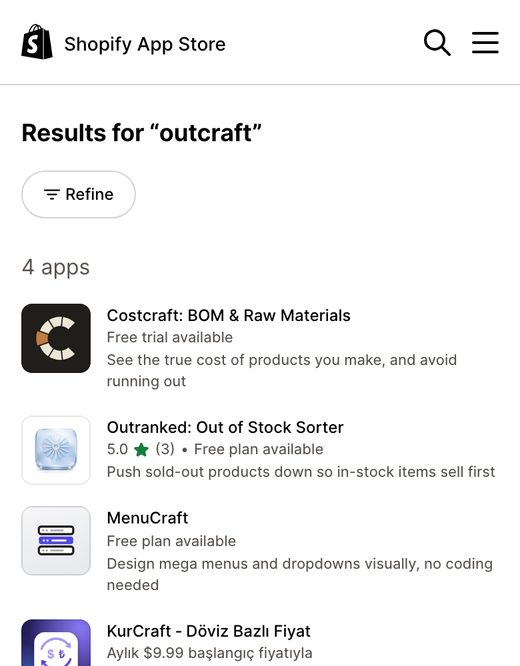
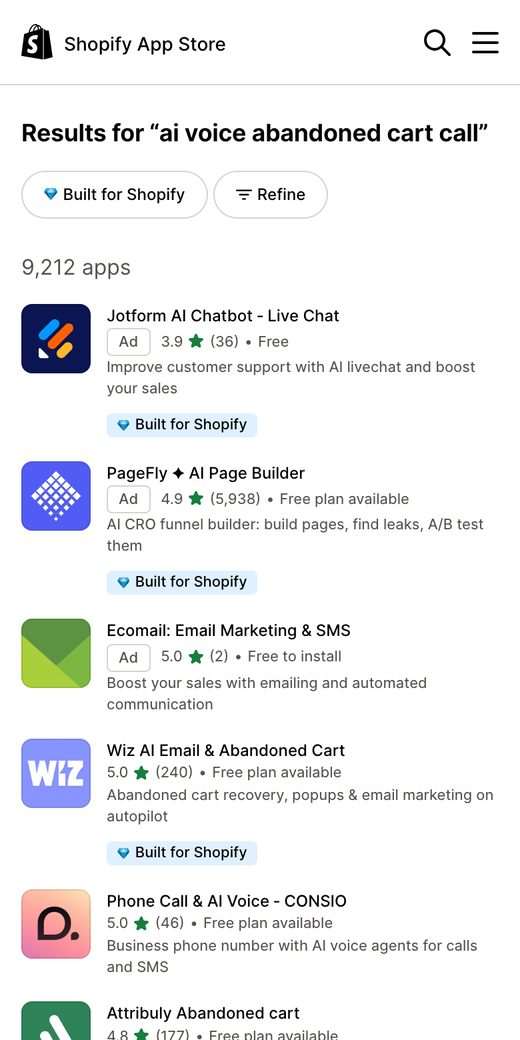
Shopify App Store, searched on 29 November 2026.
 12
What it costs
Every owner who hears about Outcraft and checks the App Store finds nothing to install.
 123
Outcraft already has
200+ brands as clients. That’s 200 possible reviews.
Steal this
List the app and ask happy clients for a review.
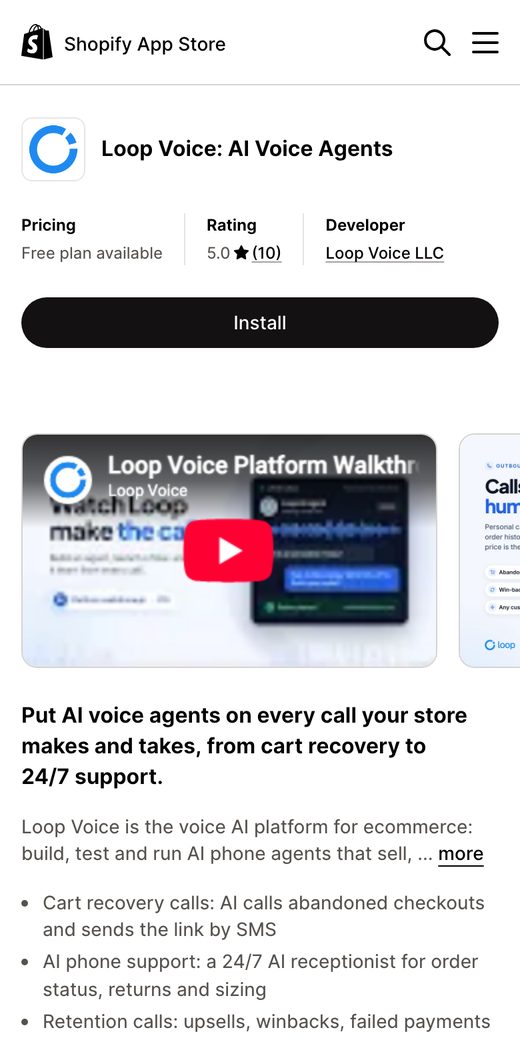 123
Outcraft already has
A real recorded call on the homepage, and a “get a call” demo.
Steal this
Put the real call in the listing video. A free first week.
Starting prices of AI cart-calling apps on the Shopify App Store, next to Outcraft.
What it tells me
Outcraft is the most expensive name on this list, and the only one with 13 million calls behind it. Clones can copy the feature. They can’t copy the data. So every ad and listing has to lead with the proof: $74M recovered, Pulsetto’s $1.4M, a real call. Today the ads lead with iMessage.
Prices from the apps’ Shopify App Store listings (Sharyx, Voxicart, Daberly, CartCall, Callfy). Outcraft’s “from $300/month” is from its own site.
Five blocks every growth plan needs: who buys, how you reach them, what it costs, proof, and what comes next.
The headline, my version
We win Shopify brands through the App Store and ads made from real calls, at a cost per installed store we track from week one.
Mixed. Ecommerce brands, and B2B SaaS teams in the top video.
Shopify brands with abandoned checkouts worth calling. One buyer.
A podcast with 16 to 98 views. Ten iMessage ads.
The Shopify App Store, plus real-call ads.
Three pricing models, depending on the page.
One price sentence. Cost per installed store, tracked.
Strong but hidden: $74M, Pulsetto $1.4M, a real call.
In every ad, on the listing, on every landing page.
Not stated.
German and Nordic stores, with calls in their own language.
The full analysis behind the loop. Open what you want.
How the ads make them look today
An iMessage tool for Shopify.
What they should be
The AI salesperson that calls your lost shopper and brings back the order.
For Shopify brands losing carts at checkout, Outcraft calls and messages shoppers within minutes and closes the sale. Unlike an email flow, it answers the objection. 13M+ calls, $74M+ recovered.
Hero
Watching carts die at checkout every night.
Problem
Three hours later, the shopper bought elsewhere.
Turn
The shopper says “too expensive”. The AI handles it.
Proof
Real audio, 13M calls, Pulsetto’s $1.4M.
Invite
See what would have come back.
Marketing
push
Content
pull
Growth hacking
product
The overlap
Real calls as proof, demo and ad at the same time.
Communities
Short form
UGC
Podcasts to sponsor
Niche experts
YouTube
Three screens: where owners find it, how shoppers agree to calls, and the offer that closes.
Shopify App Store listing
Install
Hear a real call: “too expensive” → order
Checkout with consent
Checkout
Phone +1 ··· ··· ····
Continue to shipping
One-week replay
YOUR LAST 7 DAYS · EXAMPLE
What we would have recovered
Book 15 minutes about your number
Every move in the plan has a company already doing it. Real pages, captured 29 November 2026.
Already works for
App Store listing with a free plan, a 5.0 rating and a walkthrough video.
Outcraft: a listing with a free week and the real call as the video.
Already works for
240 reviews shown right in the search results.
Outcraft: ask 200+ client brands for a review in month one.
Already works for
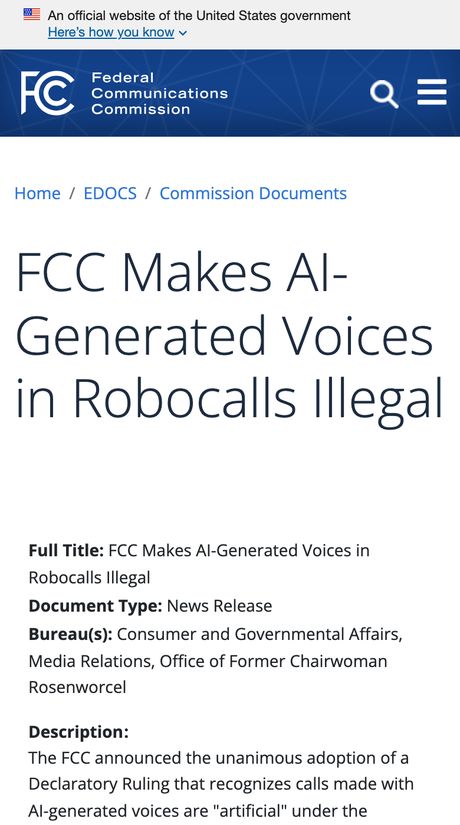
A real recorded call and a “get a call” demo already exist, on the homepage only.
Outcraft: move them into every ad and landing page.
Short real calls, not long podcasts. One breakdown a week, cut into clips for the rest of it. Four weeks, starting 30 November.
The shopper said “too expensive”. Listen.
TuesdayObjection, answer, order. 20 seconds.
Mon + ThuEmail in 3 hours. Call in 3 minutes.
WednesdayPulsetto: $1.4M recovered.
FridayFour ads, storyboarded second by second. Same budget for each, live for 7 days.
Real call
Waveform: “It’s a bit too expensive.”
AI: “Your cart still has free shipping…”
Order recovered: $129. Hear it on your phone.
Why: The product sells itself if you let people hear it.
Speed
Abandoned checkout, 14:02.
Email at 17:02. Outcraft call at 14:05.
Send us one week of carts.
Why: Compares with what they already pay for.
Proof
$74M+ recovered, counting up.
Pulsetto’s founder: $1.4M.
Install from the Shopify App Store.
Why: The thing cheap clones can’t copy.
Data
From 2M+ analysed calls.
Fun: 33.4%. Problem-solvers: 18%.
Get the study.
Why: Value first, for owners not ready to buy.
Every ad is read in this order. The first weak number tells you what to fix.
3-second views ÷ impressions
If it’s weakChange the first 3 seconds of audio.
Clicks ÷ impressions
If it’s weakChange the headline or the number.
“Call me now” ÷ visits
If it’s weakFix the landing page.
Installs or weeks sent ÷ test calls
If it’s weakFix the offer and the listing.
Paying stores ÷ installs
If it’s weakFix onboarding and the first report.
The bottom two of four after 7 days. No second chances, the budget moves on.
A strong hook with weak clicks gets a new headline. Many test calls but few installs sends us to the offer and the App Store listing.
The lowest cost per installed store doubles its budget each week while it holds. Its call becomes next week’s breakdown.
Every move, with what it needs, what it costs, the rule that could stop it, and a plan B.
 checkedchecked
Four weeks to turn the calls into the ads. Starting Monday, 30 November.
Week 130 Nov – 4 Dec
Week 27 – 11 Dec
Week 314 – 18 Dec
Week 421 – 23 Dec
January
Call Breakdown on YouTube, and a new ad from the best call.
February
Klaviyo agencies and retention consultants bring their clients.
Spring
German and Nordic stores, with calls in their own language.
Week 1 needs: access to 5 approved call recordings and the ad account.
Builders pick a card, build a product and take it to real customers. Investors watch the numbers, not the pitch. The market picks the winner, on camera.
1
Teams draw a brief from the deck. Each card is a real challenge with a real number to hit.
2
72 hours to build the product, the page and the first ads. Cameras on every decision.
3
Launch to real customers. A live leaderboard shows money in, not likes.
4
Lost Astronaut and guests look at the numbers and decide who gets a term sheet.
One warehouse, four teams, one screen everybody watches. Seen from above.
Team A
Captain: a known creator
Card: sell 100 mr.Soda home kits in Vilnius
Cam 1
Team B
Captain: a founder from the portfolio
Card: find €1,000 of wasted ad spend for 5 stores
Cam 2
Team C
Captain: a growth marketer
Card: recover €1,000 in lost carts
Cam 3
Team D
Captain: a student from MVP
Wildcard: first to €1,000 from strangers
Cam 4
A pop-up stall at the door and the teams’ live stores. Strangers buy, or they don’t. Every sale rings a bell on the floor.
Cam 5 · street
Glass walls, three chairs, the leaderboard on the wall. Lost Astronaut and two guests call teams in at hour 24, 48 and 72.
Cam 6 · confessional
Leaderboard numbers are an illustration of the format, not a forecast.
Built on the rule from MrBeast’s production guide: the first minute matters most, and something new happens every few minutes.
Build or Bust · Episode 1
4 teams. 72 hours. €1,000 or bust.
4 Teams Build a Business in 72 Hours. Only 1 Gets Funded.
0:00
One team at €0 with 6 hours left. Then: “72 hours earlier.”
1:00
Four captains, four cards, the stake on screen.
3:30
The page breaks, the supplier says no, the team argues.
6:00
The bell rings on the floor. The clip everyone shares.
9:00
One team hears “no” on camera.
12:30
Money in, a term sheet, and “apply for season 2”.
Cards come from the portfolio and from partners. Companies get growth, builders get a stage.
DTC card
AI card
72hAI card
Open card
They watch to learn how: which tools, which shortcuts, how a page and an ad come together in 72 hours.
They watch for the result: did a stranger actually pay? Real money is the stake that keeps them to the end.
The pieces are already proven. Nobody has put them together for builders.
50M viewers in 25 days
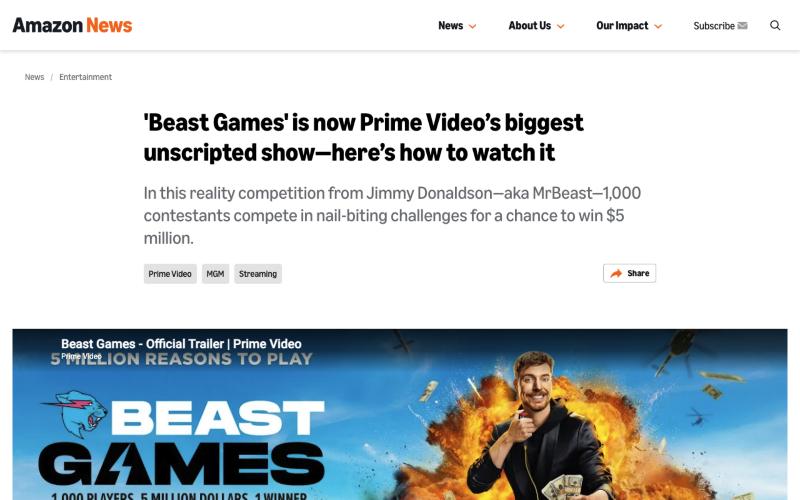
Beast Games became Prime Video’s most-watched unscripted series. 1,000 players, one winner. Renewed for two more seasons.
46M to 367M views
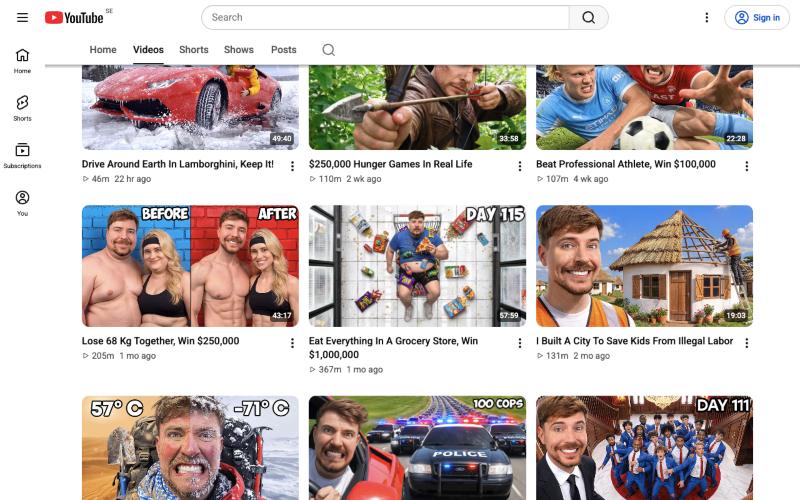
The title formula is a simple challenge plus a clear stake: “Beat Professional Athlete, Win $100,000”. Multi-day challenges show the day count on the thumbnail.
youtube.com/@MrBeast, 29 Nov 2026
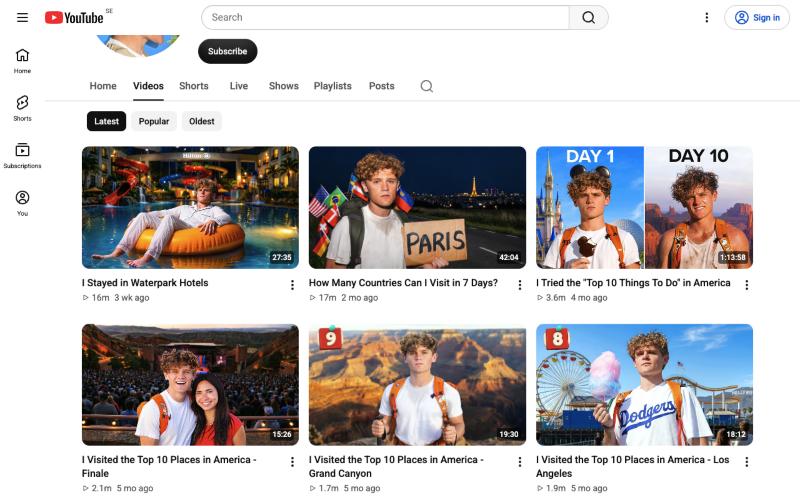
~200M views in 30 days
Ryan Trahan’s penny series ran as daily numbered episodes with a finale. He describes his series as built like a TV show, with a predictable structure every day.
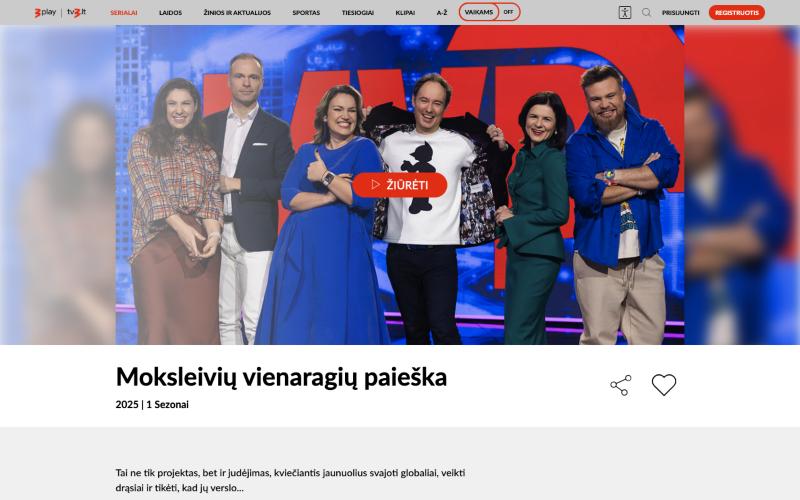
Marius already did it on TV
MVP, co-created by Marius Burgaila, puts students on prime-time TV building and pitching startups. Build or Bust takes it online, global and to real customers.
Go Vilnius · TV3 Play
“Building is easy. Distribution is hard.”
Stan’s co-founder, on Launchpad: about 100 founders, two weeks, a $100,000 prize, filmed as a series. Under30CEO
Rules from the formats above, applied to builders.
The title
“Build a Business in 72 Hours, Win €100,000”
“5 Strangers Build Apps. Only 1 Makes Money”
The first minute
MrBeast’s leaked production guide calls the first minute the most important, and asks for a re-engage moment every few minutes. Open on the leaderboard, not the intro.
The cast
Each team gets a known creator as captain. The audience comes for the captain and stays for the underdog.
The stakes
The scoreboard is euros from strangers. A failed launch is as watchable as a win.
Every episode becomes 50+ short clips. A paid army of clippers posts them, paid by the view.
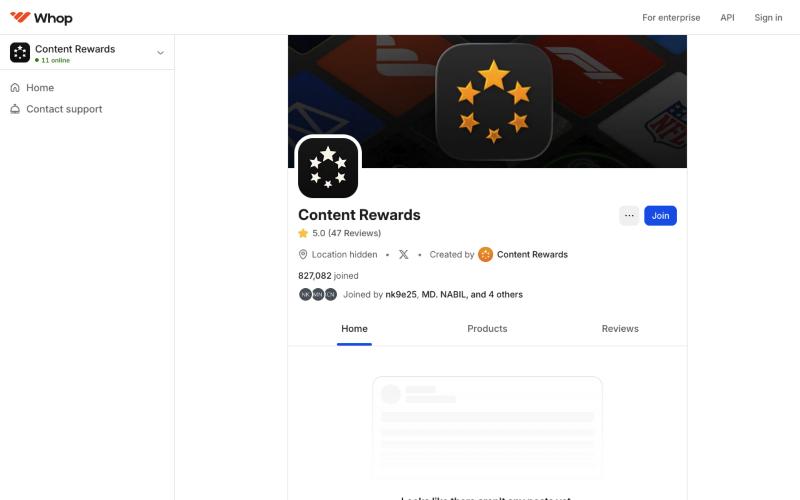
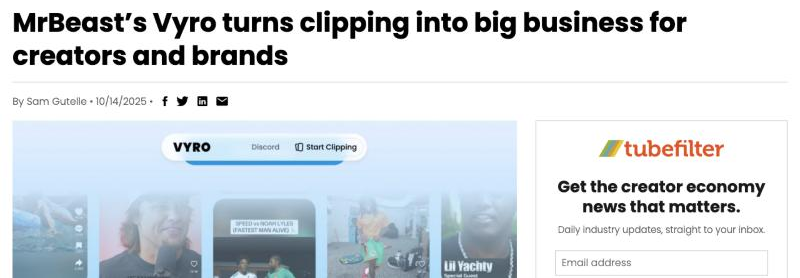
~$1
typical pay per 1,000 views on clipping campaigns
€5,000
a clipping budget for one episode
≈5M
short-form views, if the rate holds near $1 per 1,000
The clips that travel: the moment it sold, the investor says no, the team falls apart, the first €1 from a stranger. Every clip ends with “Apply for season 2”.
Each event feeds the next one.
1 →
Builders, cards, real customers.
2 →
50+ shorts per episode, posted by clippers.
3 →
Viewers follow the builders and the captains.
4 →
Better builders apply. Brands pay to put a card in the deck.
5 ↺
Bigger prize, bigger captains, bigger cards.
Deal flow
You see how people build under pressure before you invest.
Portfolio growth
Every portfolio card is a growth sprint, filmed and clipped.
Revenue
Sponsors buy a card in the deck and a moment in the episode.
Brand
Lost Astronaut becomes the name builders know before they need money.
Four teams, four cards, one investor room in Vilnius or Riga. Film it, clip it, and let the numbers decide if there is a season one.
Sources: Amazon News, Variety, Gigazine on the MrBeast production guide, Jellysmack, Tubefilter, Bloomberg, Under30CEO, Go Vilnius.